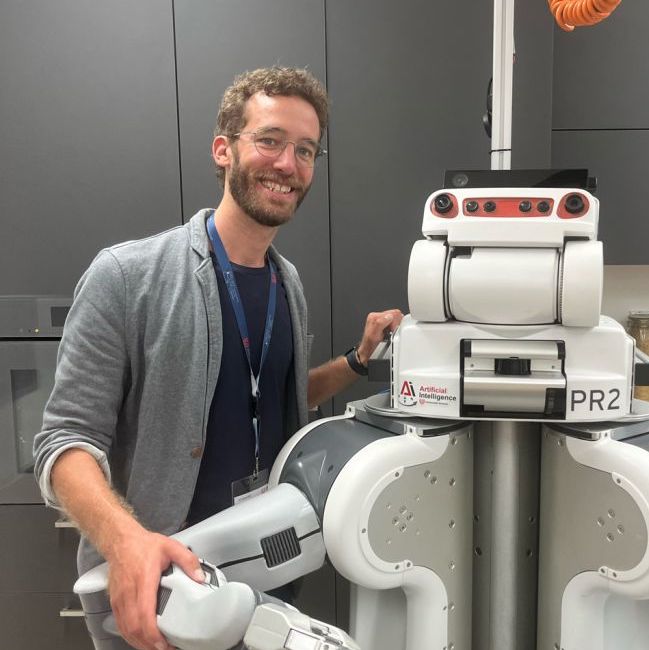
Maximilian Durner

Enthusiastic in the field of Computer Vision, Machine Learning and Robotics
max.durner@gmail.com

I am a researcher and Research Group Lead for Semantic Scene Analysis (SemSA) at the DLR Institute of Robotics and Mechatronics. My work sits at the intersection of machine learning and physical interaction, focusing on object-centric perception for autonomous mobile manipulators. Beyond advancing my own research interests, I am deeply committed to mentoring the next generation of roboticists and managing high-impact projects. My goal is to bridge the gap between clean lab environments and the real-world robotics, ensuring that robots can perceive and act reliably, whether in domestic service, industrial robotics, or planetary exploration.

News


Experience

Group Leader of Semantic Scene Analysis Research Group

  • Research on semantic interpretation of robotic scenes, (object-centric) perception for manipulation in dynamic environments
  • Managing and Supervising Research Group
Juli 2022 - Present

Research Associate in Computer Vision and Machine Learning

  • Research on class-agnostic object segmentation, scalable learning approaches for object related vision algorithms, fusion of robotic vision and manipulation
  • Implementation of algorithms and integration of visual sensors for mobile robots
May 2016 - June 2022

Teaching Assistant: Machine Learning for Computer Vision

Chair of Computer Vision & Artificial Intelligence, Technical University of Munich
  • Teaching course-related exercises twice a week (~40 students)
  • Lessons focus on: bayesian statistics, classical machine learning, deep learning (theoretical and practical)
September 2019 - March 2022

Working Student

German Aerospace Center, Institute of Robotics and Mechatronics
March 2015 - March 2016
  • Master’s thesis topic: Probabilistic Graphical Model for RGB-D object recognition
  • Development of a classifier ensemble for RGB-D object recognition
  • Generation of a dataset of household objects for classification
Chair for Data Science, Technical University of Munich
April 2014 - August 2014
  • Development of an actor-critic reinforcement learning algorithm for laser welding
  • Implementation of this algorithm in C
Infineon Technologies AG, Product development RF & Protection Devices
December 2013 - March 2014
  • Assembly of test setups for high-frequency sensors
  • Execution of test series
TUM Create, Prototyping & Testbedding, Singapore
August 2013 - October 2013
  • Implementation of a controller for a personalized air condition system of a fully electrical vehicle in MATLAB Simulink
  • Assistance in the prototype assembly of the vehicle

Education

Ph. D.: Computer Science

Chair of Computer Vision & Artificial Intelligence, Technical University of Munich
Ongoing

Master of Science: Electrical Engineering and Information Technology

Technical University of Munich
March 2016

Bachelor of Science: Electrical Engineering and Information Technology

Technical University of Munich
September 2013

Exchange Semester

Politecnico di Torino, Italy
October 2011 ‒ June 2012
Universidad Nacional de Colombia, Bogotá
August 2014 ‒ December 2014

Projects

Ongoing

  • INVERSE, WP-Lead
  • Ro-X
  • ASPIRO, WP-Lead
  • MUSERO
  • Matic-M, DLR Impulsproject
  • LUNA
  • COVIPA
  • euROBIN

Skills

Programming & Tools

Python

ROS

Linux

MacOS

Git

TeX

Pytorch

Tensorflow

Robot Platforms

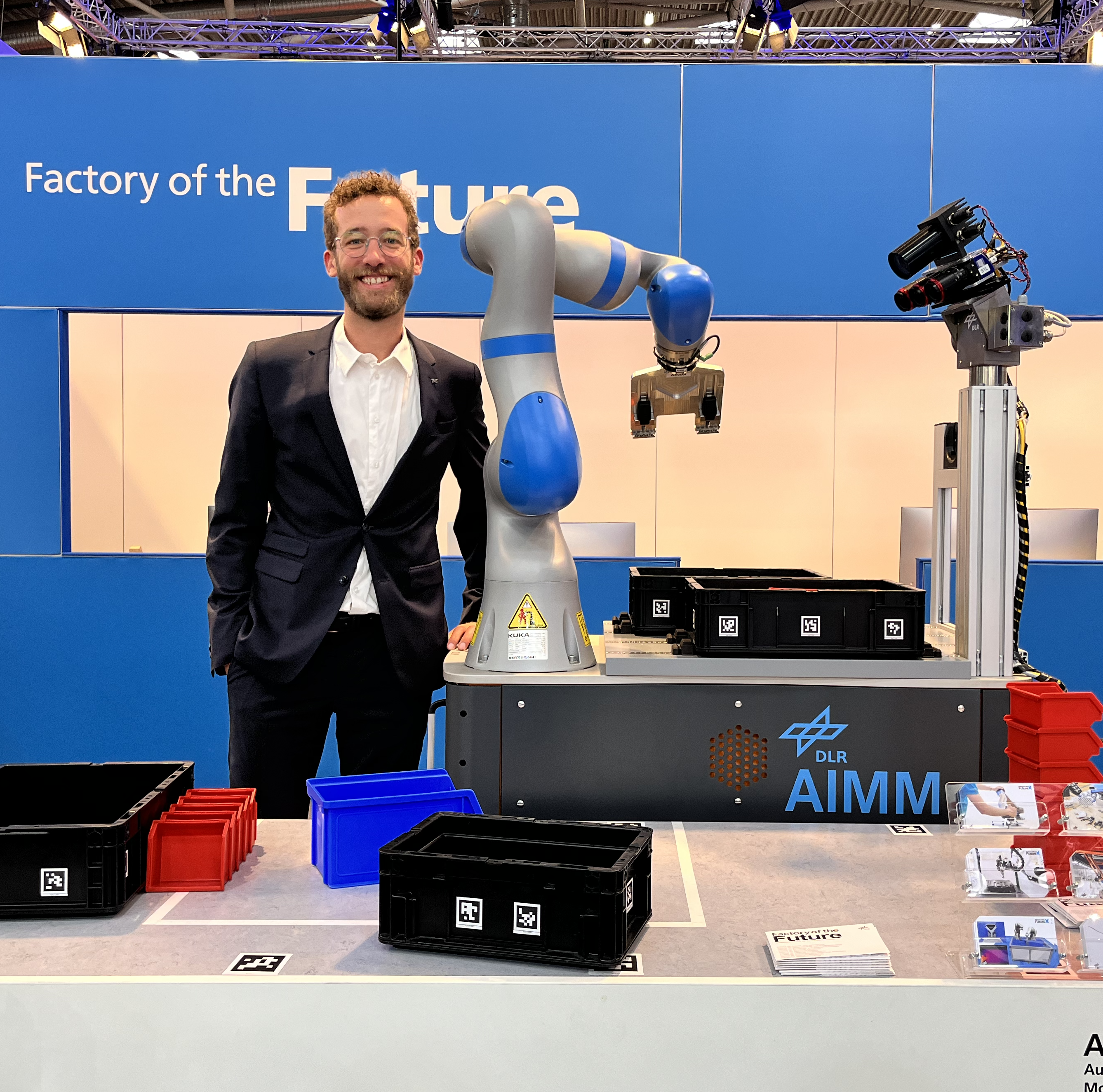
AIMM

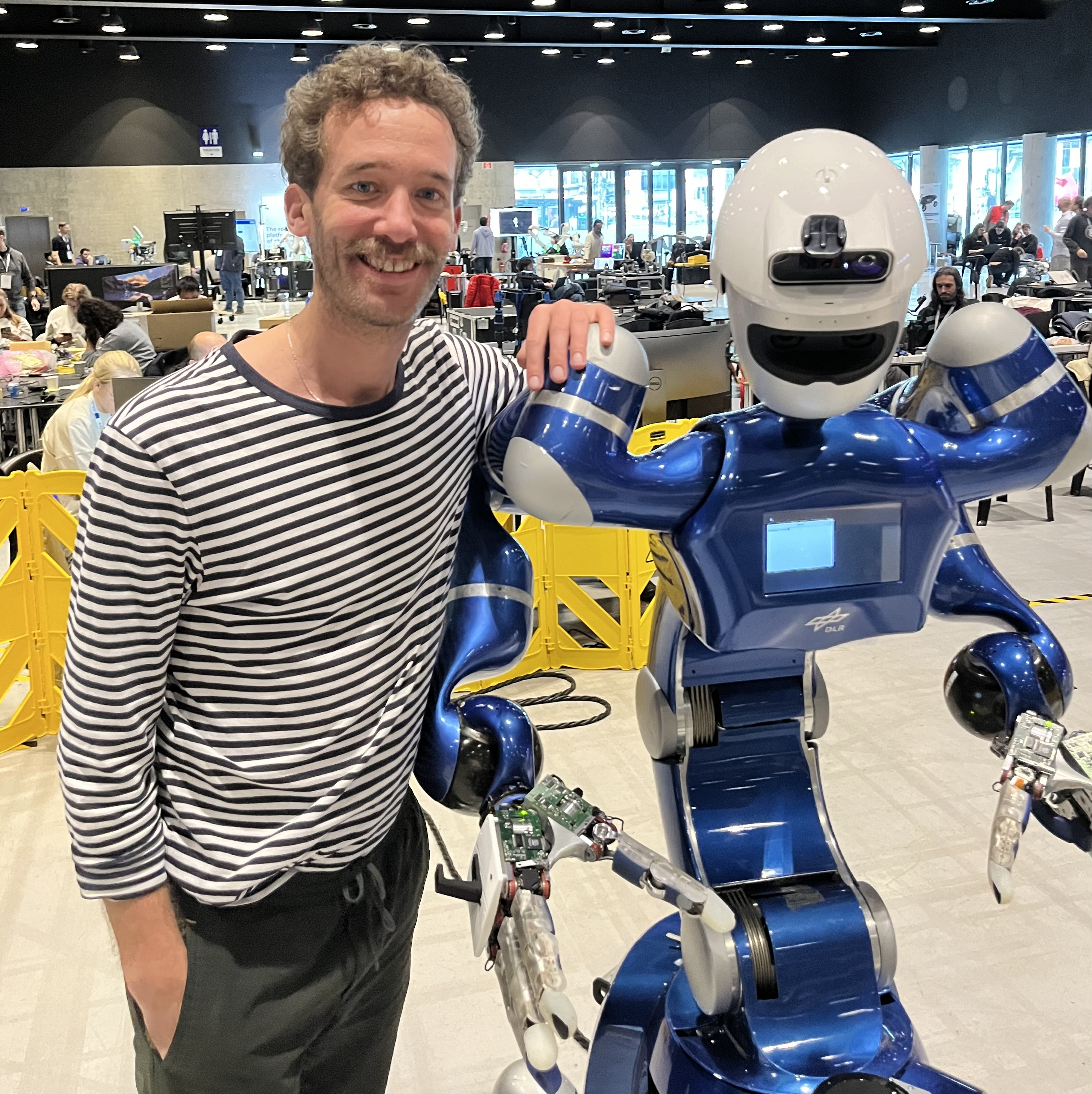
LRU2

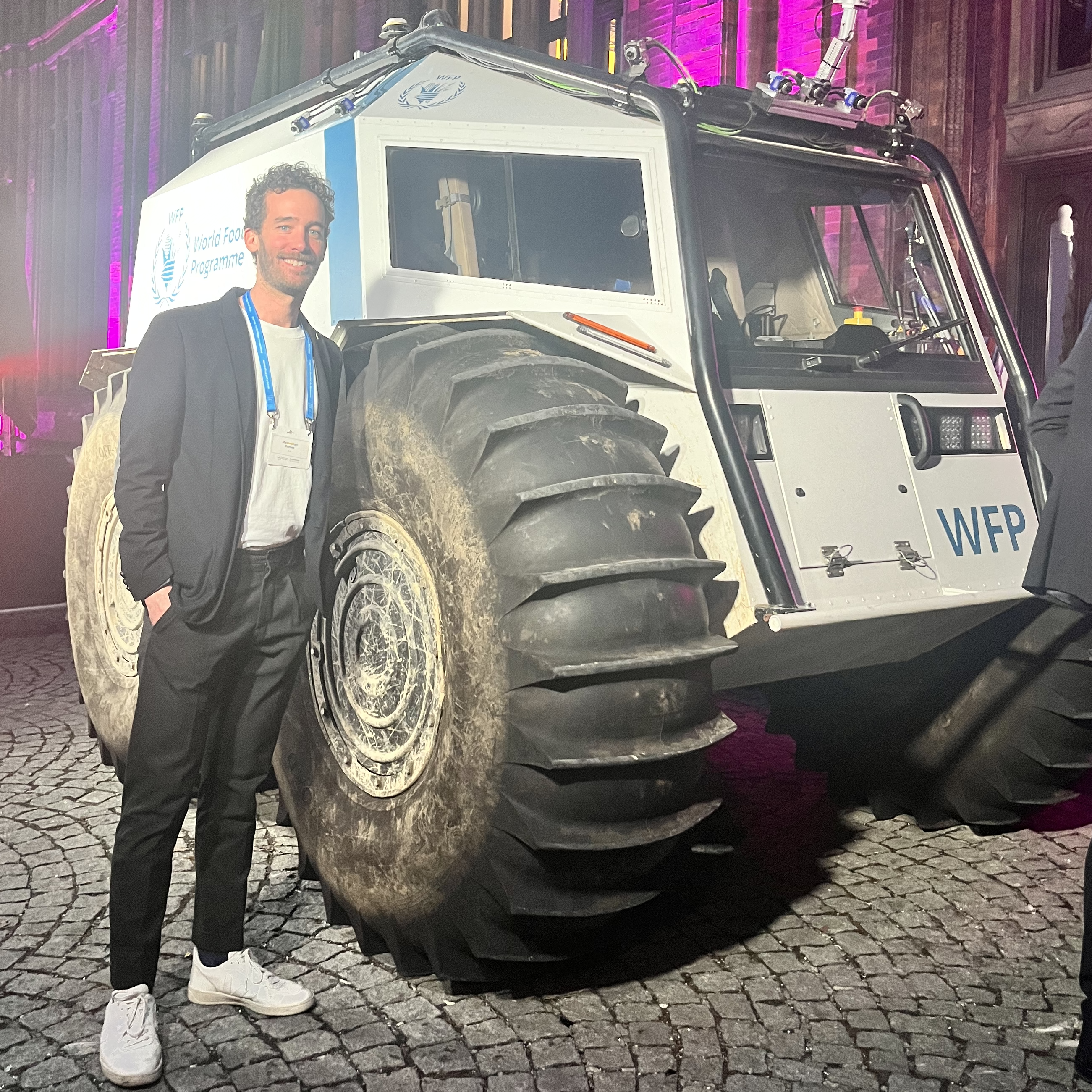
SHERP

LWRs


Publications


Academic Services

Workshop Organizer

Supervision

  • Improving 6D Pose Estimation Accuracy of Articulated Objects by Considering Physical and Visual Plausibility, by David Risch, TUM, 2024 (Master's Thesis)
  • A Comparative Study of Classical and Learning-Based Methods for Vision-Aided Close-Proximity Asteroid Exploration, by Anibal Guerrero Hernandez, TUM, 2024 (Master's Thesis)
  • Improving Robustness of an Unknown Instance Segmentation Algorithm, by Stella Tragianni, TUM, 2023 (Master's Thesis)
  • GNNs for Knowledge Transfer in Robotic Assembly Sequence Planning, by Matan Atad, TUM, 2023 (Master's Thesis)
  • Representation Learning for Robot Keypoint Detection using Prior Kinematic Knowledge, by Leonard Klüpfel, TUM, 2022 (Master's Thesis)
  • Visual Similarity Detection Based on Latent Representations, by Kanstantsin Tkachuk, TUM, 2021 (Master's Thesis)
  • Learning a Generic Robot Representation from Motion, by Yogesh Baljeet, Saarland University, 2021 (Master's Thesis)
  • Adversarial Occlusion Augmentation: Guided Occlusion for Improving Object Detector, by Liu Siyuan, TUM, 2020 (Master's Thesis)
  • Uncertainty-Based Improvement of a Visual Classification System, by Jianxiang Feng, TUM, 2019 (Master's Thesis)
  • Vision assisted biasing for robot manipulation planning, by En Yen Puang, Universität Stuttgart, 2018 (Master's Thesis)
  • Augmented Autoencoders for Object Orientation Estimation trained on synthetic RGB Images, by Martin Sundermeyer, TUM, 2017 (Master's Thesis)